


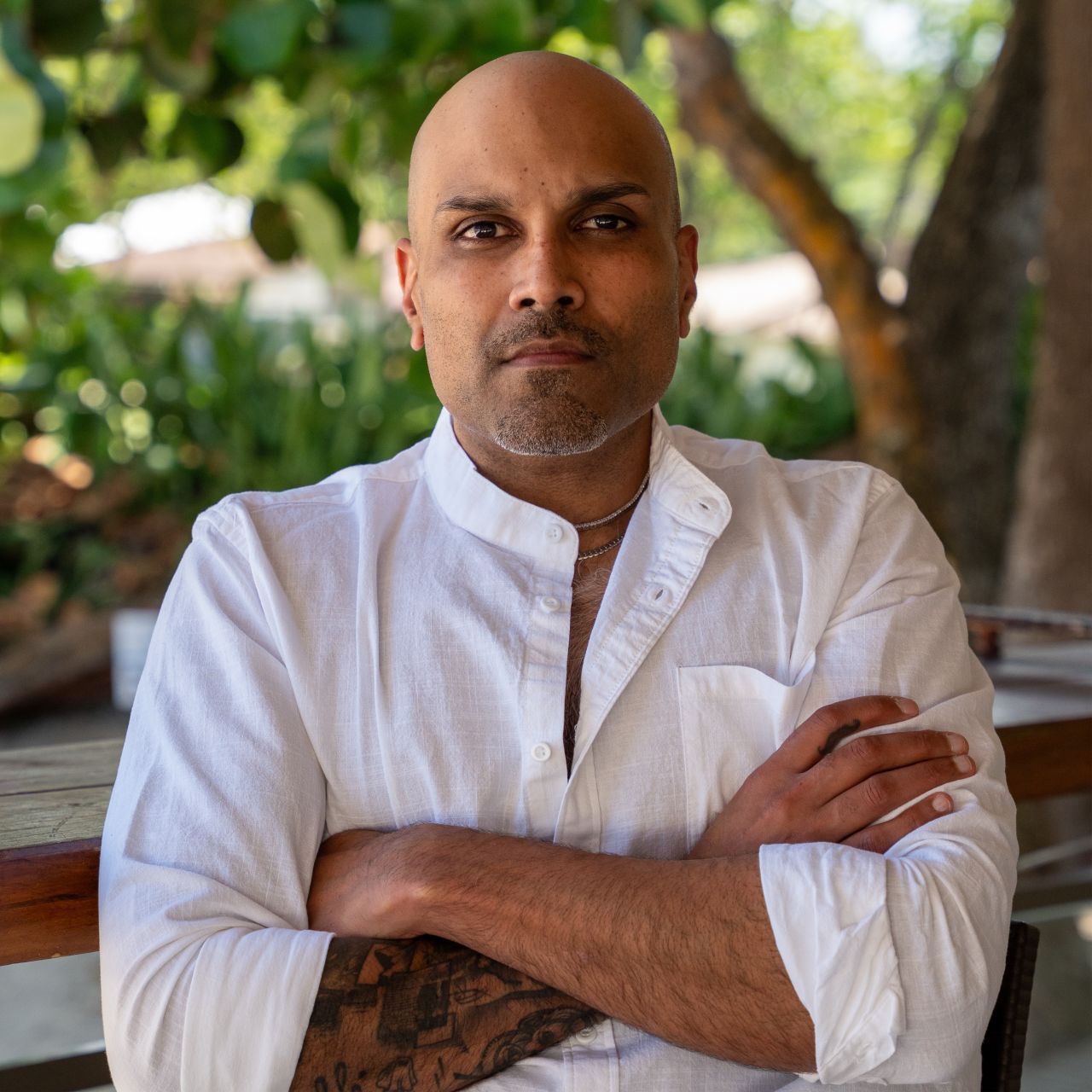

POINT A:
- ~$40-50K MRR
- Founder trapped in delivery - every escalation, every decision routed through Sam
- Scaling ads but couldn't turn them on without the back end collapsing
- No delivery model that could hold weight
- Brute-forcing revenue to cover structural cracks
- Constant low-grade anxiety
POINT B (after working with Big Growth Group):
- $100K+ MRR with 60 active clients in any given month
- Lean team absorbing exponentially more clients with zero quality degradation
- Delivery and ops built to scale up and down on demand
- Sam barely works in day-to-day
- General manager doing meaningful work she enjoys, not firefighting
- A repeatable growth model Sam can apply to any future business
- No anxiety.
Sam was doing what most agency founders do at his stage.
Brute-forcing revenue, closing deals, personally holding together a delivery machine that was one bad week away from cracking.
On paper, things were moving.
But... Sam knew something was about to break.
"It's not so much that we had a problem. It's more so that we knew we were going to have a problem if we didn't fix it first."
The Cage He Built Himself
Here's the thing about agency founders who are good at sales. They solve everything with more revenue. They close harder, run faster, and stack more clients on top of a delivery model that was never built to hold weight.
Sam knew that pattern. Because he'd lived it.
He'd already started ramping up ads but what he couldn't do is scale the front end of the business because the back end would collapse under the pressure.
No delivery playbooks.No defined roles.No delivery model that could absorb growth without Sam personally stepping in to hold it together.
"Running the agency pre-Romans and Kristina, it was riddled with anxiety. Just figuring out what the issues were so we can fix them before they happened just created a whole bunch of anxiety."
That's the invisible tax most founders pay - the constant low-grade dread that a crisis is coming and you're the only person who can deal with it.
Sam is sharp enough to name this clearly: "No anxiety-riddled founder is going anywhere either."
He's right. You can't think strategically when your nervous system is in permanent triage mode.

The Fork in the Road
Sam had already been thinking about hiring someone fractionally to help with ops. The market was serving him ads for it daily - SOP builders, ops consultants, people who'd charge $5K-$10K a month to document your processes and walk away.
He'd worked at one of those big consulting firms himself. The kind that charges $2 million for a PowerPoint deck. He knew what that world looked like from the inside.
So when he met us at an offsite, something clicked differently.
"Romans and Kristina kind of demonstrated to me that it's not going to be any old kind of fractional person. There's a very specific kind of model and a specific methodology that needs to be leveraged in order to be successful."
Sam had seen enough consultants to know the difference between someone who documents your problems and someone who actually fixes them.
This is a distinction that matters more than most founders realise.
An SOP sits in a Google Drive folder and gets ignored within three weeks. A delivery engine actually runs your business while you step away from it.
Into the Deep End
.jpg)
What happened next is the part most operational or transformation engagements skip entirely.
We didn't come in and tinker with “screws and wires”. We mapped the entire business - delivery model, KPIs, roles, bottlenecks, client success metrics to understand where the leaks actually were. We later used it to create a data layer in his agency.
And here's what Sam discovered…
The real problem wasn't any single bottleneck. The business had no layer between Sam and everything else. Every client escalation, every quality issue, every operational decision routed through one person - and that person was already maxed out.
That's the pattern we see in almost every agency between $500K and $3M. The founder IS the delivery model, and until that changes, nothing else can.
We ran weekly meetings
Answered ad hoc questions fast
Kristina took ownership of the process mapping
We didn't just hand Sam a binder of SOPs and wish him luck. We built the machine with him, inside his business, week by week.
The Leverage Model

There are two ways an agency can be structured.
We show both to every client we work with.
- The first is the Dependency Model.
The founder at the base, holding all the weight. Operations stacked above them. Delivery above that. People at the top. It looks like a pyramid because it is one - and the founder is the load-bearing wall. Pull them out and the stack collapses.
That was Sam's business. And it's the business of almost every founder we talk to between $500K and $3M - The second is the Leverage Model.
The founder moves to the top - architect and owner, not load-bearer. Between them and the day-to-day sits a layer that doesn't exist in most agencies at this stage: data, AI, and systems. That layer connects to people, delivery, and operations below it. Everything talks to everything else. The founder sets direction. The machine handles operational execution.
Sam's job was to rebuild where he stood in relation to them.
The Transformation (RESULTS)
The outcome was a fundamentally different business.
- $100K+ MRR with 60 active clients in any given month
- Lean team absorbing exponentially more clients with zero quality degradation
- Delivery and ops built to scale up and down on demand
- Sam barely works in day-to-day
- General manager doing meaningful work she enjoys, not firefighting
- A repeatable growth model Sam can apply to any future business
- No anxiety.
Sam barely does any work now. His words, not mine.
He just came back from a 3-day strategic planning session with his team where they reviewed wins, losses, and how much more they can achieve with their existing delivery model. He's doing the things he's actually good at - business strategy and growth - while the operational machine runs underneath him.

Most founders at $500K-$3M think they have a sales problem, or a hiring problem, or a "I just need better people" problem. They have a structural problem, and the structure starts with them.
If This Sounds Like You
You've got clients and revenue is moving, but everything still runs through you.
You've thought about hiring an ops person. Maybe you've even tried it. But deep down you know that documenting your processes is nowhere near the same as building a machine that actually works without you in the middle of it.
The anxiety isn't from one specific fire. It's from knowing the next one is coming and you're still the only person who can put it out.
That's exactly what we diagnose.
Take the Founder Dependency Audit.
Across our client portfolio we work with eCommerce and B2B marketing agencies generating over $50M in aggregated revenue.
We’ve sat inside their operations, studied their P&Ls, rebuilt their offers, and redesigned their systems.
It’s a structured diagnostic where we analyse how your agency currently runs across:
- delivery & operations
- sales systems
- decision frameworks
- team structure
- AI
The goal is simple.
To identify exactly where founder dependency is sitting inside the business and what sequence of changes removes THAT DEPENDENCY without breaking what’s already working.
.jpg)


