


.avif)
Imagine you're the director of an orchestra.
The performance is tonight. The musicians are talented but disorganised. The sheet music is scattered. No one knows when to come in.
So you decide to bring a world-class musician. Someone who can play violin, piano, drums, and trumpet at a professional level.
You tell them:
“I need you to play all the instruments, conduct the orchestra, tune everyone's instruments before the show, handle ticket sales, and make sure the audience leaves happy.”
Sounds absurd, right?
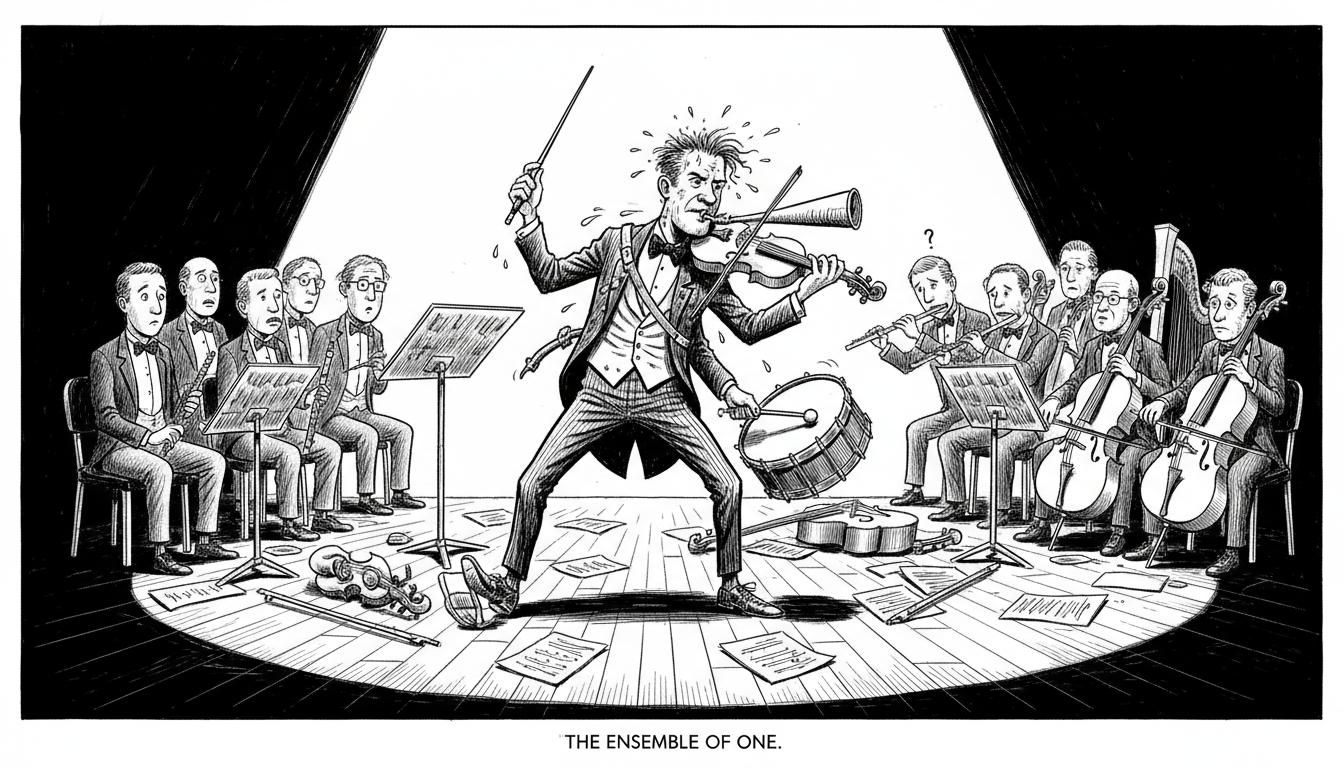
But this is exactly what happens when agencies hire senior operators.
Just last week I had a conversation with a senior leader at a one of the fastest-growing eCom agencies in the world who’s taking on a more senior role.
He's been there for sometime now. He's capable and he's committed.
However…
The founder created a senior leadership role that includes:
- own performance across 100+ clients (incl. enterprise level)
- final word on strategy
- handle all escalations
- oversee several dozen onboardings per month
- monitor churn risk
- build systems
- hold the team accountable
- and much more
This is soooo typical… and to be honest nothing to be surprised about.
But let’s breakdown WHY this is BAD.
1. The "Superhero Hire" Trap (Or Why You Keep Hiring One-Person Bands)
The agency founder is essentially attempting to solve multiple structural problems by creating a "super-duper-octopus-hero" role that combines Head of Client Success + Head of Service + Strategy + Escalation point + Onboarding lead.
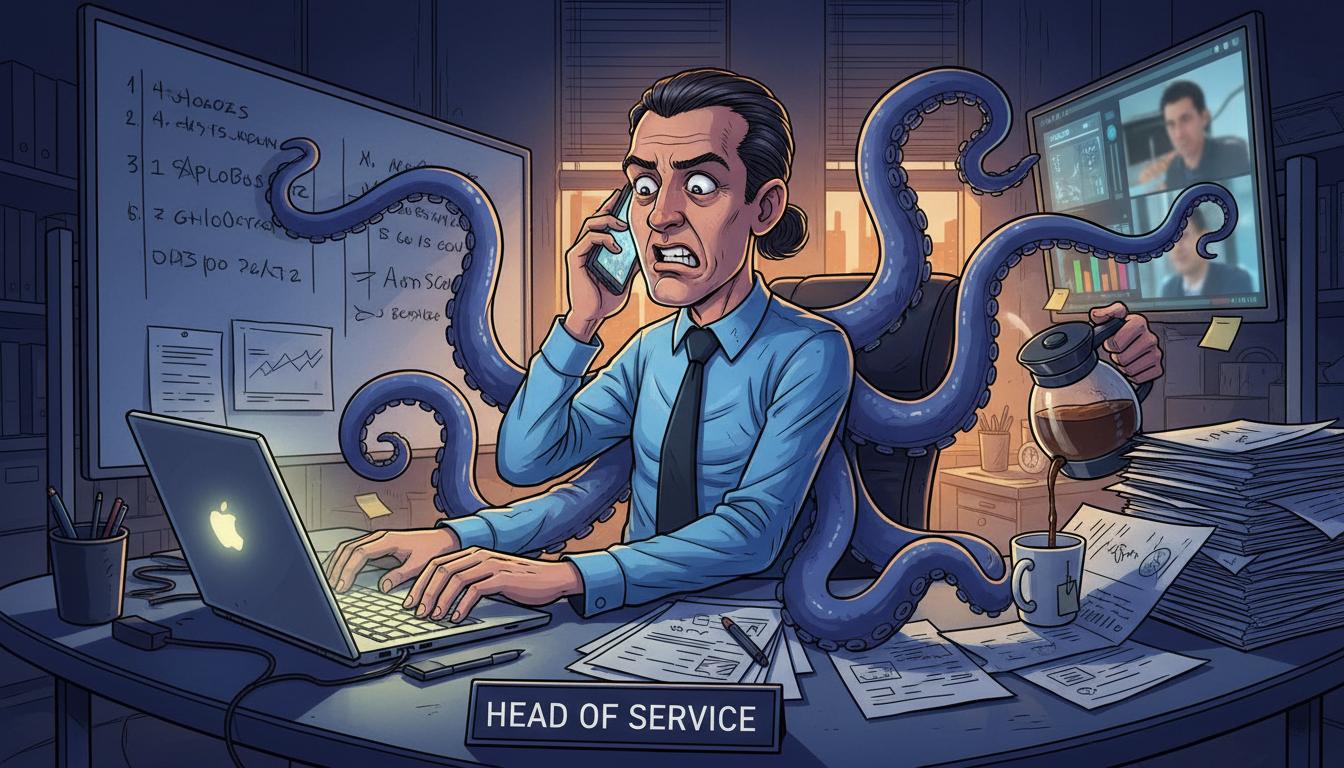
Why?
Founders are typically vision and sales people. They see a problem: clients are unhappy, the team is firefighting, quality is slipping and their instinct is: 'We need the right person to fix this.'
They see problems as "people problems" when they're actually "system absence" problems.
But operators see problems differently. They see broken systems, unclear decision rights, and processes that require heroics to function.
The founder sees a people problem.
The operator sees a systems problem.
That gap creates a fundamental mismatch.
2. The Raw Materials Fallacy
The agency is giving that new Senior Leader hire raw materials (people, partial processes, unclear responsibilities) and expecting him to both BUILD the system AND EXECUTE within it simultaneously.
This is structurally impossible at scale.
There are only 2 senior leader onboarding models in the agency biz. So chose your hard:
Model A: "Here are the tools, people, and strategies... build the system yourself"
Model B: "Here's a functioning system, optimise and scale it"
Waittt...! There’s a another one!!
When you hire someone and give them a dozen disconnected responsibilities, you're not solving problems… you're CONSOLIDATING them.
You're saying:
“Here are the raw materials: some people, some partial processes, some unclear strategies. Now build a system AND execute within it simultaneously 🤡.”
Again, this is the RELITY of building an agency business.
The only problem is…
…it’s highly volitive, unpredictable and likely result in low ROI on hire, their burnout and ultimately you can loose them.
From Performer to Conductor
After watching this pattern repeat, I developed a framework I call the Self-Removing Operator.
It's built on a simple idea:
the best operators make themselves unnecessary at the performance level so they can operate at the architecture level.
The framework has five pillars.
- Constraint Identification.
Before you build anything, you identify the single bottleneck constraining your growth. Is it churn? Capacity? Quality? You pick one. Not three. One.
- System Before Execution.
You build the system, processes, tools, decision rights before you expect consistent execution. You don't hire someone to figure it out. You hire someone to build what makes figuring it out unnecessary.
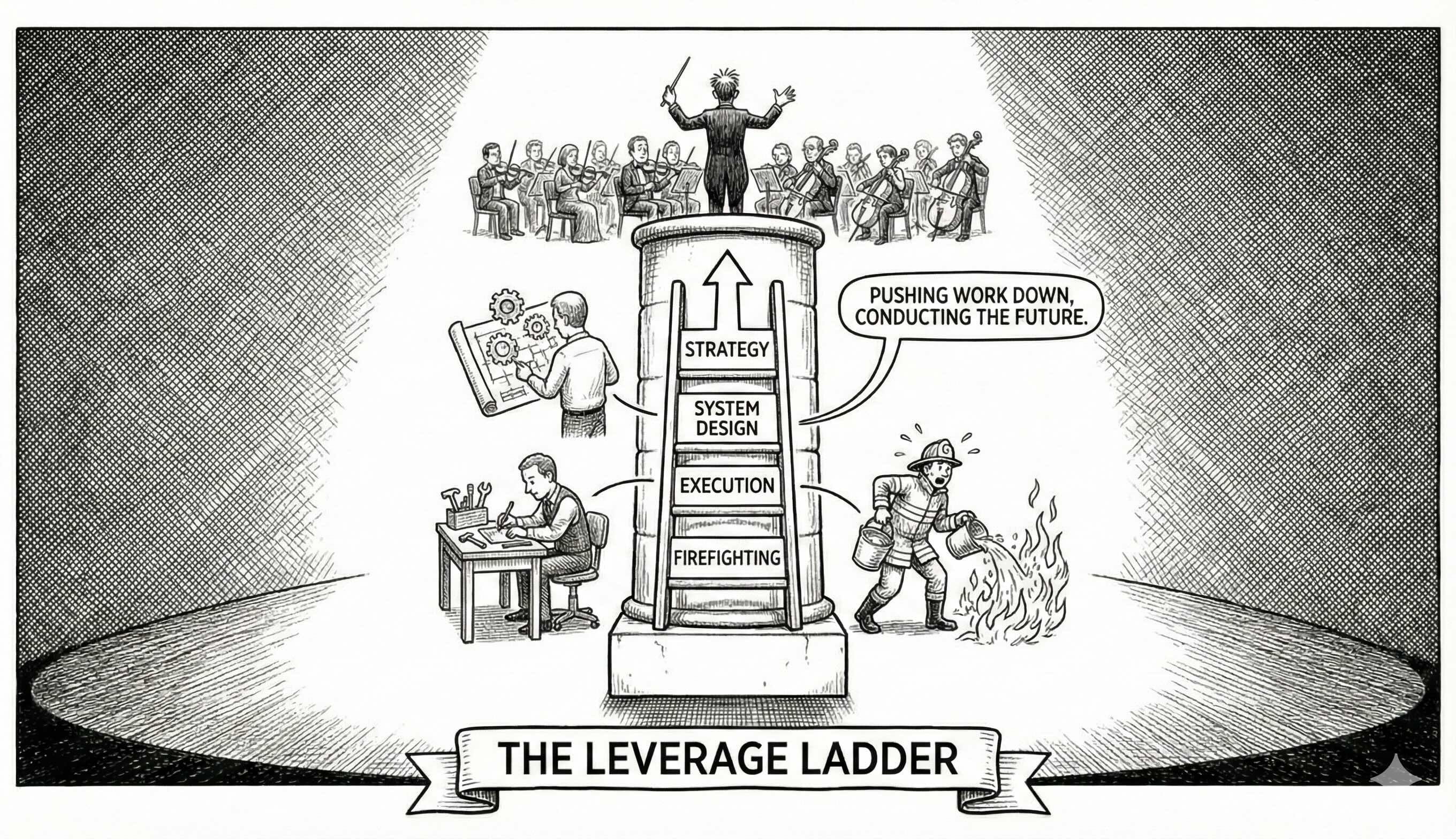
- The Leverage Ladder.
Every role should operate at the highest leverage possible. Strategy and system design at the top. Firefighting at the bottom. Your job as an operator is to push work down the ladder so you're conducting, not playing every instrument.
- Autonomy Architecture.
You build teams that function without constant oversight through clear outcomes, authority, and accountability. Not 'do what I say.' 'Here's the outcome, figure out how to get there.'
- The 90-Day Proof Cycle.
You break transformation into 90-day sprints. Each focused on one constraint. Days 1–30: listen and identify.
Days 31–60: build the system.
Days 61–90: measure and refine.
Want a proper step-by-step video walkthrough? Reply “CONDUCTOR” to this email and I’ll send it over.
Building the Orchestra
Let's go back to that agency with 100+ clients.
The founder wants to hire a Head of Service to solve churn, improve quality, and free himself up.
The old approach is the one-person band:
- write a JD with 15 responsibilities
- hire someone senior
- hope they can play every instrument
The Self-Removing Operator approach starts with constraint identification.
After 30 days of listening and observing, the operator discovers the real constraint isn't strategy or relationship management, it's onboarding.
New clients don't understand the service, expectations aren't set, and by day 60 they're already dissatisfied. That's the churn source.
So the first 90-day cycle focuses exclusively on building an onboarding system: clear expectations, client training, early wins.
Not fixing everything. Fixing the thing that causes everything else.
The operator designs the system with input from the team, documents it, trains people to run it independently, and creates metrics to show it's working.
Within 60 days, escalations drop. Client satisfaction in the first 90 days improves. Churn starts declining.
Now the operator isn't playing the “onboarding instrument anymore”. The team is.
The operator moves to the next constraint. Maybe it's account manager consistency. Maybe it's upsell systems. Whatever!
After 12 months, you don't have a one-person band. You have an orchestra.
The founder can focus on the vision.
The operator is conducting at a strategic level.
And the team is performing autonomously.
The Real Cost
I'll leave you with this.
The cost of getting this wrong isn't just the salary you pay someone for 12 months before they burn out.
It's also the clients you lose while they're overwhelmed playing every instrument.
It's the team confusion when the conductor is too busy playing violin to give direction.
It's the opportunity cost of what you could have built if you'd built systems instead of dependencies.
I've seen agencies lose hundreds of thousands of dollars in client revenue because they hired a senior person, overloaded them with a one-person band role, and watched quality drop across the board.
The alternative?
Hire someone to build one system at a time. Protect their time to do it. Measure the results. Repeat.
That's how you go from founder-dependent to system-led.
That's how you build an agency that performs whether you're in the room or not.
And that's how you keep good operators from walking out the door.
.jpg)

.jpg)


